Khaled Nabil Salama
Idea to silicon, design to deployment

The next computers will live on skin, in soil and in the sea. They will have to know when they are wrong.

Khaled Nabil Salama designs chips and sensing systems for the real world. He also builds the research programs and teams that carry scientific ideas into practice.

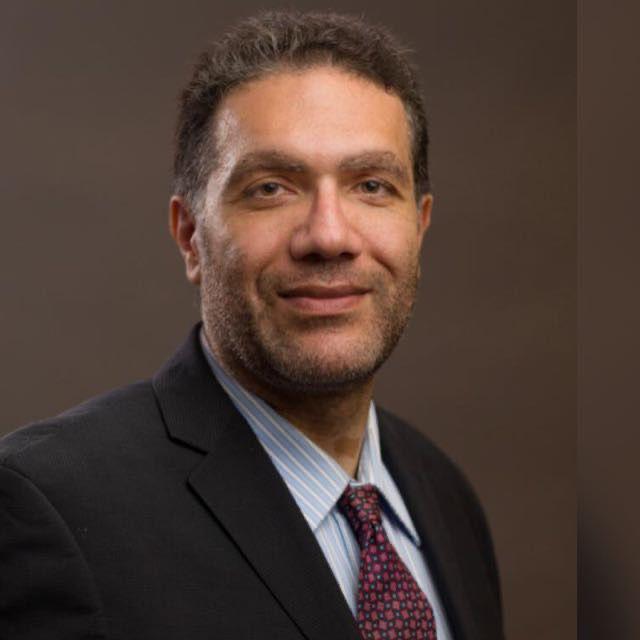
Portrait of Khaled Nabil Salama
38 PhD students · 50+ patents & applications · 3 companies foundedVinUniversity, Hanoi · KAUST · Fudan · Stanford

Building beyond the chip.

01 · Devices

A microneedle patch that reads a drug in real time.

A 2026 paper in Device, with Salama as senior author, presents a wearable that monitors the antibiotic vancomycin continuously in interstitial fluid, using aptamer-coated microneedles and on-board electronics. With its portable readout the whole module weighs 6.7 g, and the sensors stayed stable for up to 10 hours in synthetic interstitial fluid.
02 · Machines

An underwater probe that is dropped, not installed.

A 2026 paper in npj Wireless Technology, again with Salama as senior author, reports a drop-deployable probe aimed at monitoring coral reefs. It communicates with visible light and is designed to harvest power from light as well. In the reported tests the uplink reached 1.05 Mbps.

03 · Companies

Ultrawave Labs.

In 2007 he co-founded Ultrawave Labs in California and served as its chief technology officer. He has founded or co-founded three companies in total.

04 · Teams

A department and a sensing initiative.

He joined KAUST as founding faculty and was founding chair of its Electrical Engineering program (2009–2011). He established interdisciplinary cleanroom and microelectronics laboratories and the KAUST Sensors Lab, and directed the KAUST Sensors Initiative (2015–2020), served as Associate Dean of the CEMSE Division (2018–2023), and has supervised 38 PhD students.

A reading is only useful if you know how far to believe it.

What I’m working toward.

Intelligence close to the sensor.

Most sensors send raw signals somewhere else to be understood. That costs energy and time, and it assumes a connection that isn’t always there. I want the learning to happen in hardware next to the sensor, on chips designed to tolerate drift, ageing and temperature.

Part of this is already on the record. A 2014 paper I co-authored gave a closed-form way to read memristor memories without the sneak-path errors that otherwise limit them, verified in simulation. A 2024 review in Nature Communications, which I co-authored, surveys the design alternatives and tools for memristor-based neural networks. Learning on the sensor itself is the step I’m pushing toward.

Systems whose measurements can be trusted.

A reading is only useful if you know how far to believe it. A sensor that can’t tell you its contact has slipped, or that its chemistry has drifted, needs a technician standing beside it. I want systems that monitor their own contact, drift and uncertainty, and say so.

The work so far has been about making sensors last. A wearable sweat biosensor I co-authored in 2019 was built around problems its authors name: enzymes that degrade with repeated use, a limited detection range and a short shelf life. In a 2025 sensor that attaches to a plant leaf to read two hormones, a cyclical cleaning step extended the sensor’s lifespan by preventing electrode passivation, and its readings were compared against mass spectrometry.

Sensing beyond the laboratory.

The places that most need measurement are the hardest ones: air with mixed gases and humidity, living plants, the open sea. I want sensors that survive real mixtures, humidity and years in the field, so that plants, soil and oceans can be instrumented as routinely as factories are today.

A 2019 paper in Nature Communications that I co-authored with Mohamed Eddaoudi and colleagues reported fluorinated metal-organic frameworks with unprecedented SO₂ affinity, and coated transducers that detected SO₂ at 25 to 500 ppm. I also co-authored the 2016 Ocean One paper, which describes a robotic avatar for exploring ocean depths beyond the reach of divers.

Ask me.

Short answers to a few questions.

Why does AI belong inside the sensor?

Many applications can’t depend on sending every measurement to a distant server. A wearable handles sensitive data, a field sensor may have no reliable connection, and a battery-powered system may have to last months on very little energy. When the device processes information where it is collected, it responds faster, shares only what is necessary and uses less power.

What makes a sensor trustworthy?

It tells you how far to believe it. It monitors its own contact, drift and uncertainty, and says when it is wrong, so its data can be used without a technician beside it. Accuracy in a demonstration isn’t enough.

Why do promising laboratory devices stall at the prototype?

A sensor on its own is rarely a finished solution. Turning its signal into something people can use takes accurate capture, low-power processing, interpretation, secure communication, robust packaging and testing under real conditions. Those skills sit with different people, so bringing them together around one problem is usually the hardest part.

How should health sensing be judged?

By the decisions it changes, not by demonstrations. Continuous measurement through microneedles or sweat only matters when it changes what a clinician or a patient does.

What does research leadership mean to you?

It isn’t only setting a direction. It is bringing the right people together, creating the conditions for excellent work, and helping promising ideas travel further.

Where I’m building next · Hanoi, Vietnam

Building again, in Hanoi.

I joined KAUST before it opened, when there were programs to create, laboratories to build and people to recruit. At VinUniversity I’m doing it again, in a country where new research capacity is still being built.

Health

Biosensors, wearables and minimally invasive systems that bring monitoring closer to patients and out of the hospital, and intelligent sensing that helps older adults live safely and independently.

Edge AI

Sensors, circuits, embedded processors and algorithms designed together, so a device can interpret what it measures where it is collected.

Environment

Intelligent sensing for air and water quality, and for the resilience of communities.

Vietnam’s growing technology, manufacturing and healthcare ecosystems offer a place to test technology against real needs, not only inside a laboratory. The aim is to connect the university’s strengths in AI, health and the environment with hardware that works outside it.

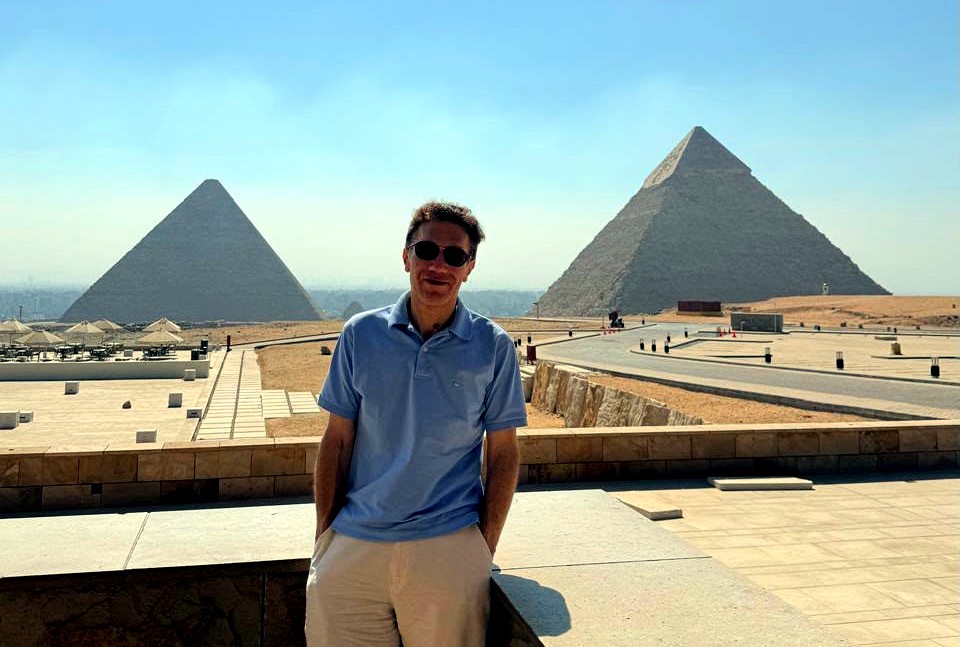
Khaled Nabil Salama standing between the pyramids at Giza
Giza

Cairo University, Stanford, KAUST, VinUniversity.

Salama studied electronic and communications engineering at Cairo University, graduating in 1997, and worked there as a lecturer and at Mentor Graphics in Cairo. He then went to Stanford, where he took an MSc and a PhD in electrical engineering under Abbas El Gamal.

He taught at Rensselaer Polytechnic Institute from 2005 and joined KAUST in 2009 as founding faculty. He is now Provost’s Chair Professor and Chief Scientific Officer at VinUniversity in Hanoi, Vietnam.

Provost’s Chair Professor and Chief Scientific Officer, VinUniversity, Hanoi. Distinguished Professor, Fudan University. Associate editor, IEEE Circuits and Systems Magazine, IEEE Transactions on Biomedical Circuits and Systems and IEEE Transactions on Circuits and Systems II.

Leadership is bringing the right people together.

Bring an ambitious idea that needs the right people around it.

Research partnerships, collaborations and students are all welcome, in Vietnam and beyond.