The sea is the hardest place I know to measure. There is salt, pressure and darkness, no mains power and no network, and anything you leave there has to look after itself for months. We have worked on it for fourteen years, and the part I find most convincing is how far one device has now travelled.
One tracker, four species, four waters
- 4species: seals, turtles, sunfish and elephant seals
- 4waters: the Caspian Sea, the Red Sea, the Atlantic and the Pacific
- 3countries: Kazakhstan, Saudi Arabia and the United States
- 6months: designed battery life
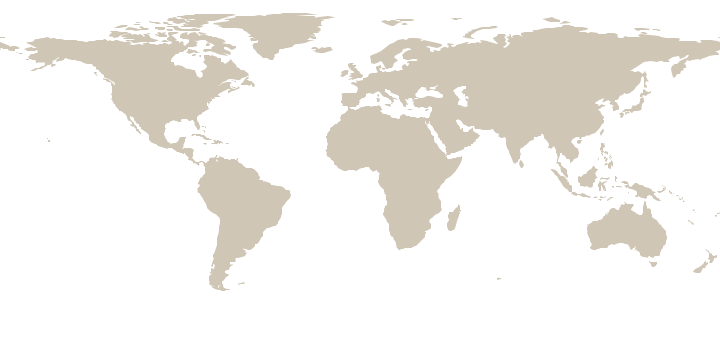
Deployment sites. Select a place.
Show as a table
| Place | Animal | Year |
|---|---|---|
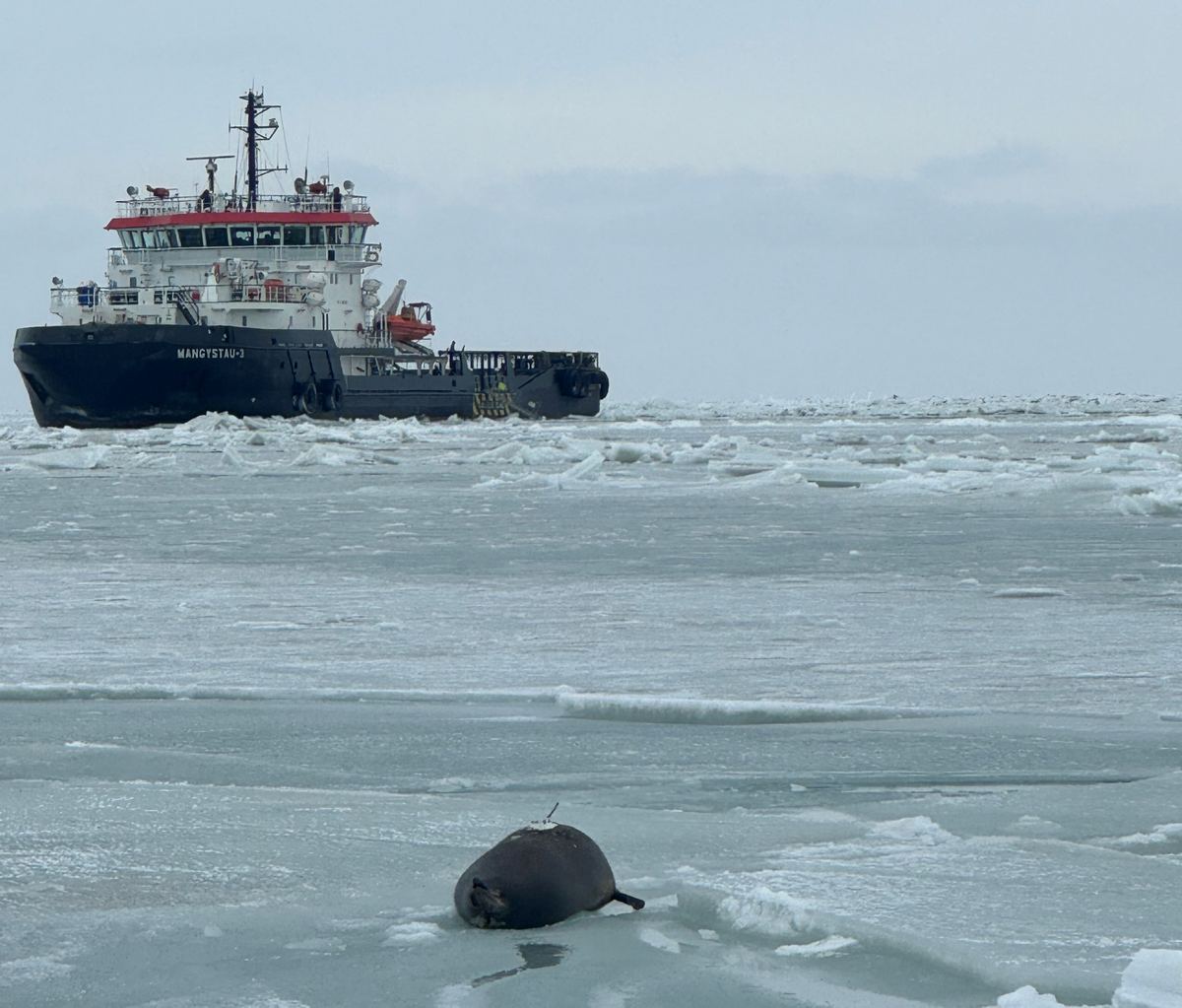
| Caspian Sea, Kazakhstan | Caspian seals | 2024, 2025 |
| Red Sea, Saudi Arabia | Hawksbill turtles | 2025 |
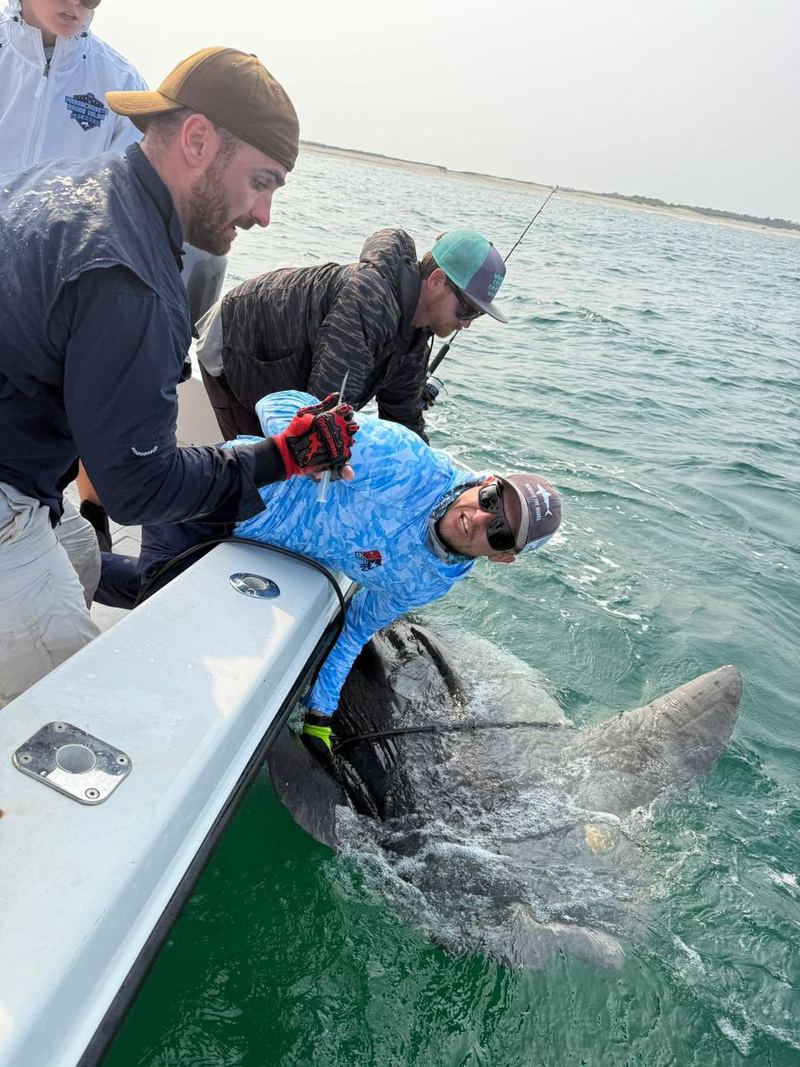
| Cape Cod, Massachusetts, USA | Ocean sunfish (Mola mola) | 2025, 2026 |
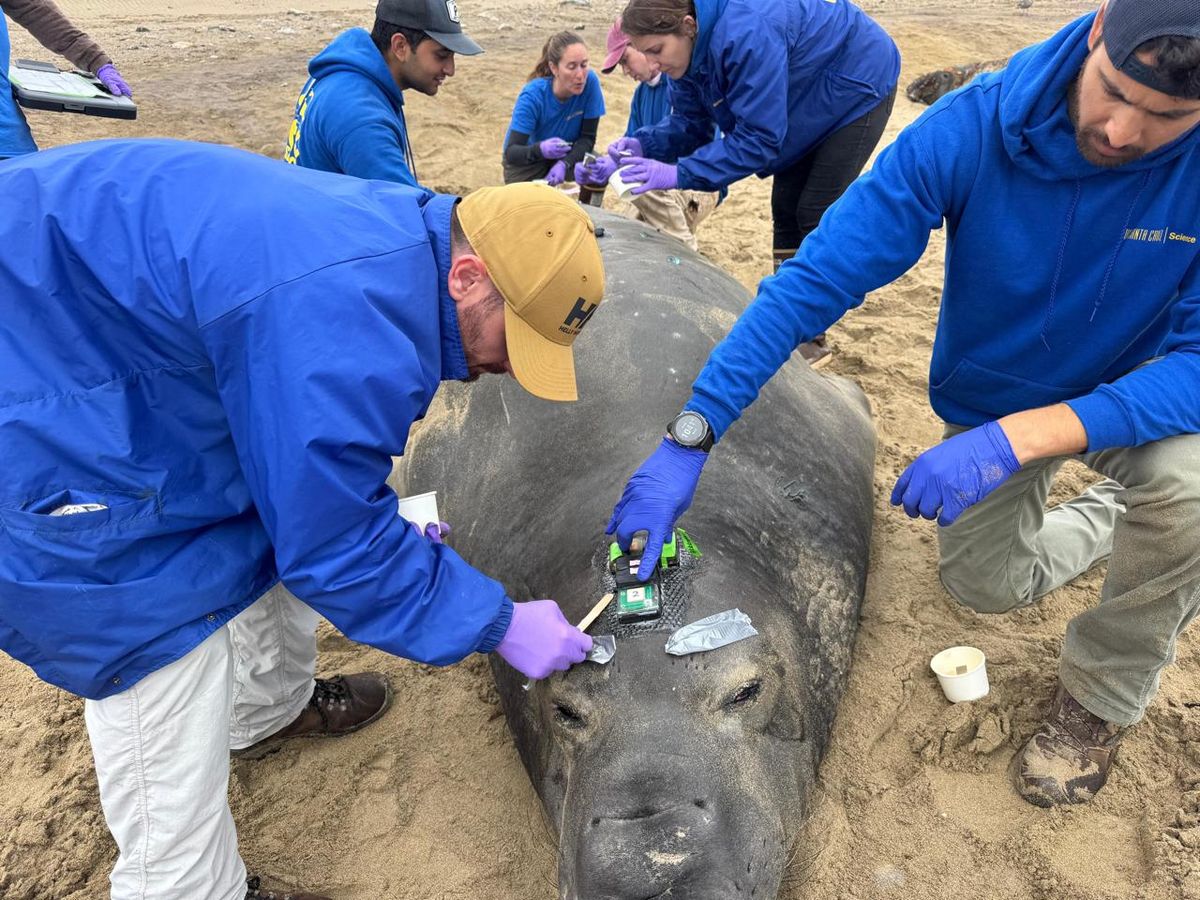
| Santa Cruz, California, USA | Elephant seals | 2026 |
Each deployment asks the same question: can a small device survive a season on a wild animal and still report faithfully?
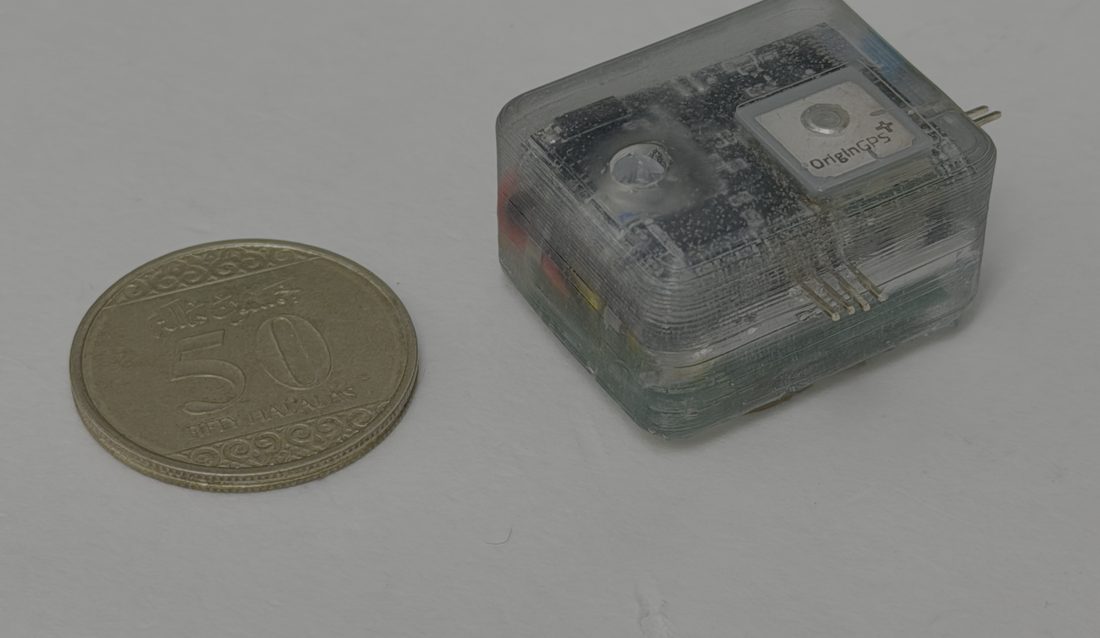
The tracker, beside a coin Small
6 by 3 cm.
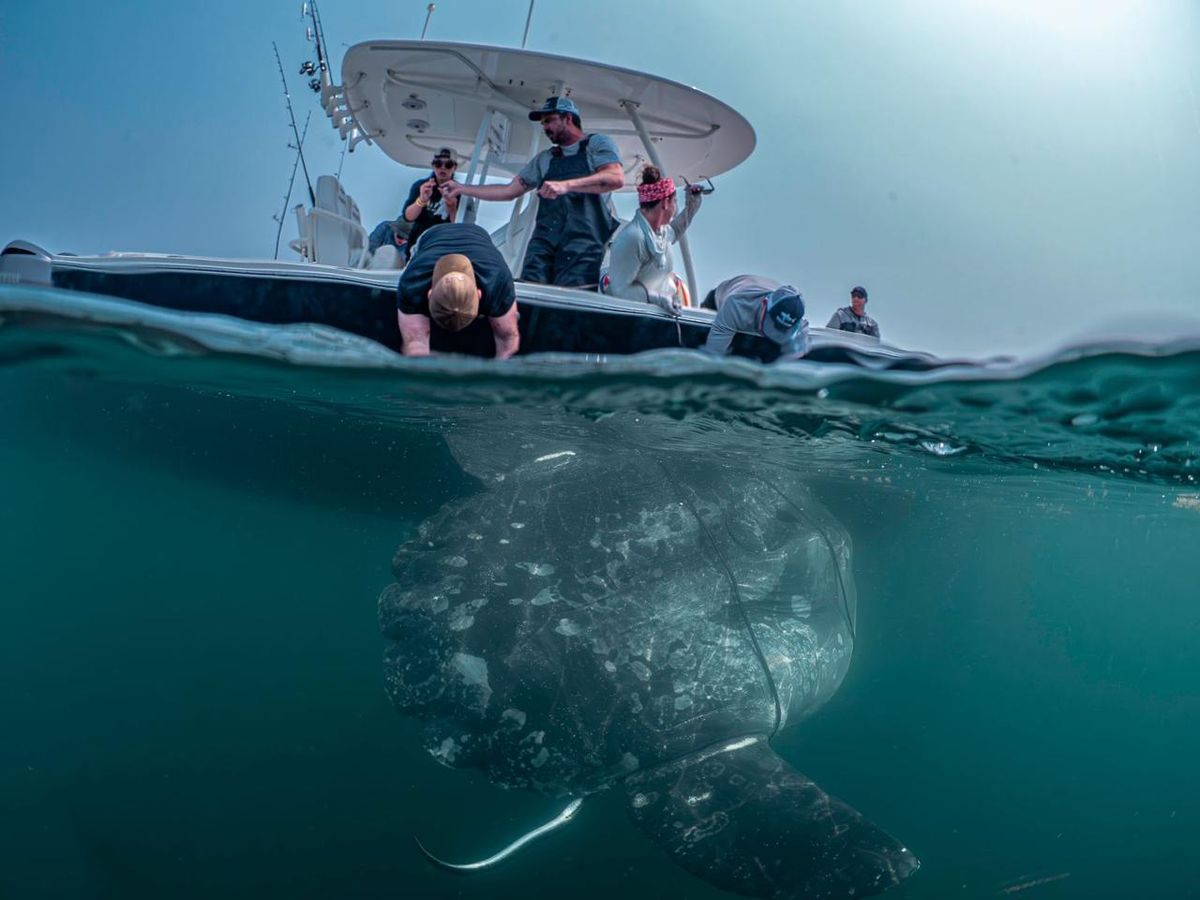
Tagging from a boat at sea Fitted at sea
Fitted by field teams, from beaches, ice and boats.
A frame from a tag’s camera, with sensor readings overlaid What it records
Temperature, depth from pressure, position from GPS, acceleration and conductivity, with a camera. It sends its data by LoRa, Iridium or Bluetooth, and the readings reach researchers by satellite and appear in an app.
In the field
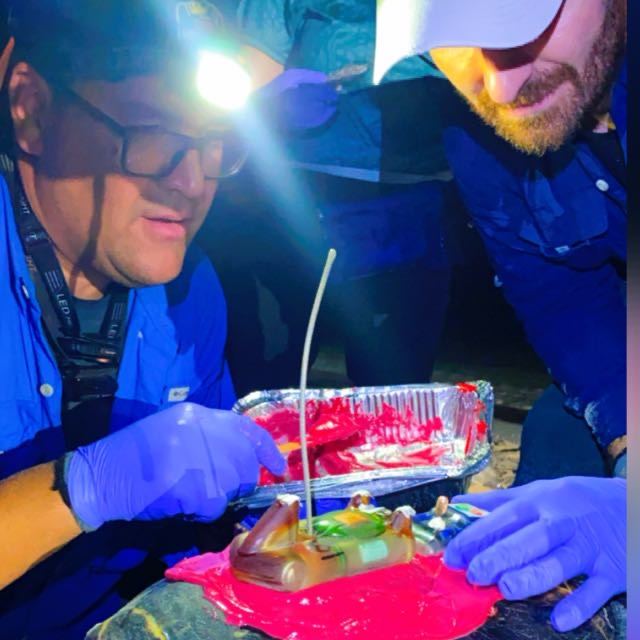
Testing automated care for coral reefs
Coral reefs are bleaching as the water warms, and one promising remedy is to give corals beneficial microorganisms that help them tolerate heat. Today they are usually applied by hand, by divers, one patch at a time.
With marine biologists at KAUST we built a system that does it automatically.
- 1WatchCameras and sensors on the reef look at the coral and its surroundings.
- 2AssessAn algorithm judges how healthy the coral is.
- 3DosePumps release the microorganisms, in the amount the coral needs.
An early FPGA design for the system, called Customized Medicine for Corals, won the 2022 InnovateFPGA Design Contest, organised by Intel and Terasic, which drew about 260 teams.
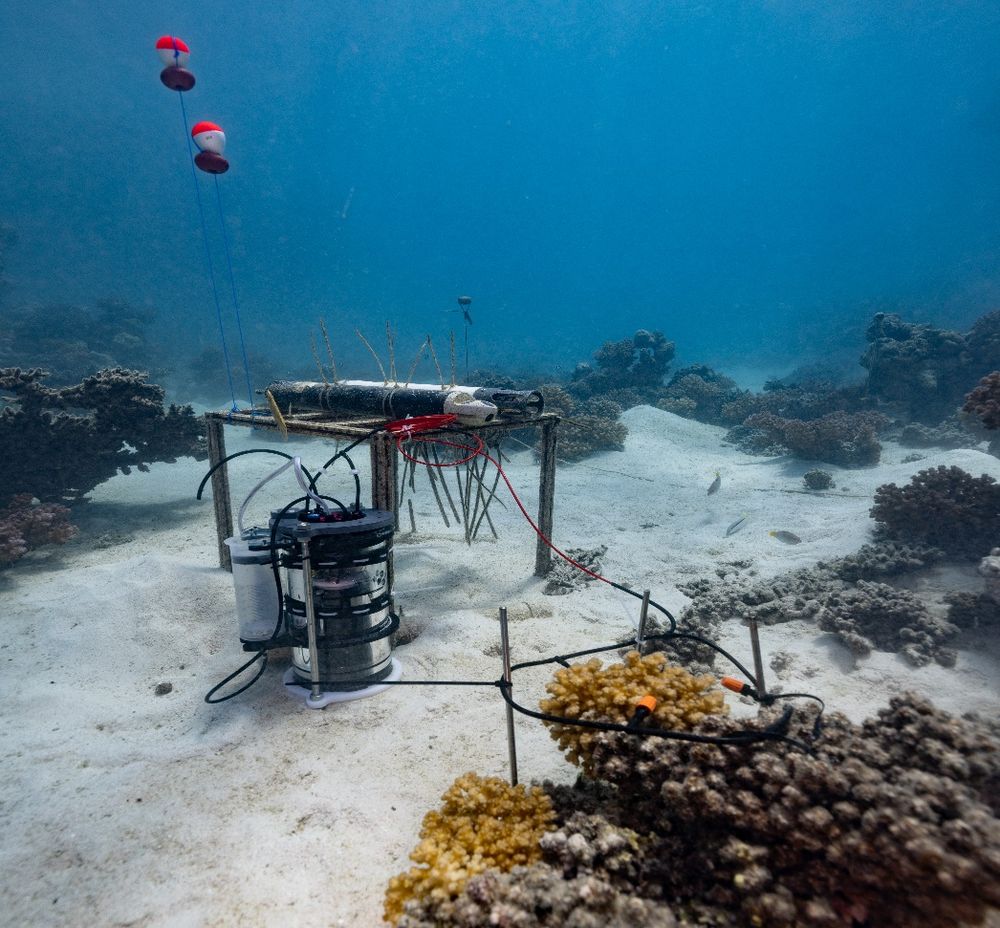
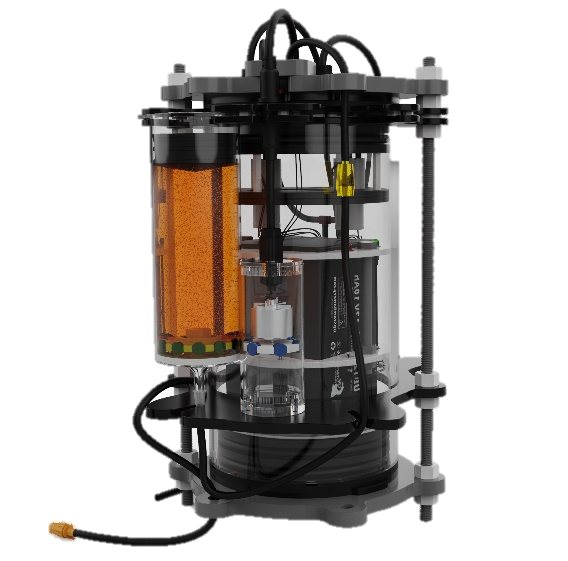
The same chips, in the water
Underwater communication, power and sensing keep returning in our work: acoustic and satellite tags in 2012 and 2014, a self-powered Internet of underwater things in 2020, a visible-light probe that talks to the surface in 2026, and a patent application on an underwater communication interface. The common thread is the one on the front page: put the intelligence next to the sensor, and know when to stop.
Papers
- Adaptive drop-deployable visible light communication-based underwater sensing probe npj Wireless Technology, 2026 Communication
- The Coral Probiotics Village: an underwater laboratory to tackle the coral reefs crisis Ecology and Evolution, 2025 Reefs
- Advancing sensitivity with laser-scribed graphene interdigitated electrodes in water quality monitoring Sensing and Bio-Sensing Research, 2025 Water quality
- Toward self-powered Internet of underwater things devices IEEE Communications Magazine, 2020 Communication
- Magneto-acoustic resonator for aquatic animal tracking IEEE Transactions on Magnetics, 2019 Tracking
- An acoustic system for autonomous navigation and tracking of marine fauna Midwest Symposium on Circuits and Systems, 2014 Tracking
- The integrated satellite-acoustic telemetry (iSAT) system for tracking marine megafauna OCEANS 2012, 2012 Tracking
If you work on marine conservation or ocean sensing and need a device that can survive a season at sea, write to me.